Mary Shelley
-
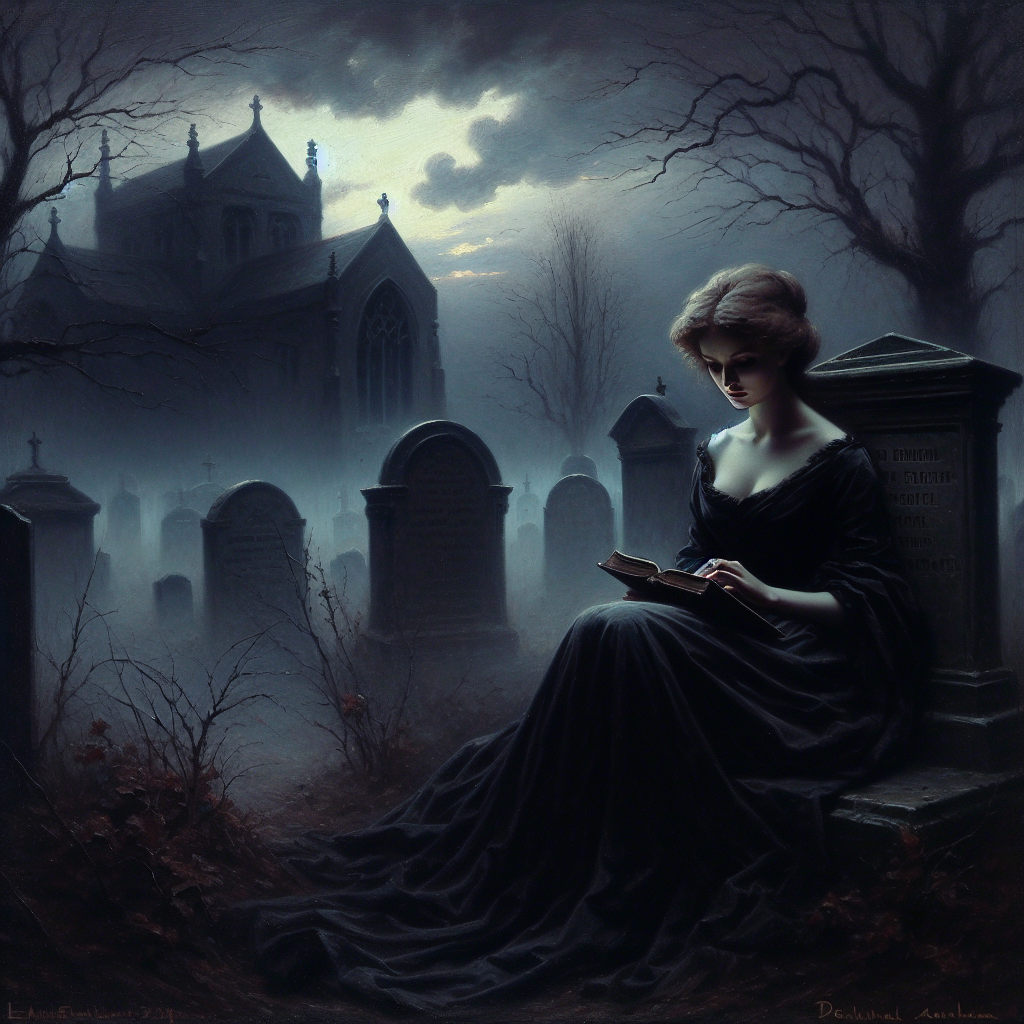
Yesterday in #EuropeanBios we covered Mary Wollstonecraft, famous feminist philosopher; today we cover her even more famous daughter Mary Shelley: poet, philosopher, romantic, author of Frankenstein, companion of Byron, and just the gothiest goth, the literal definition of goth.
-
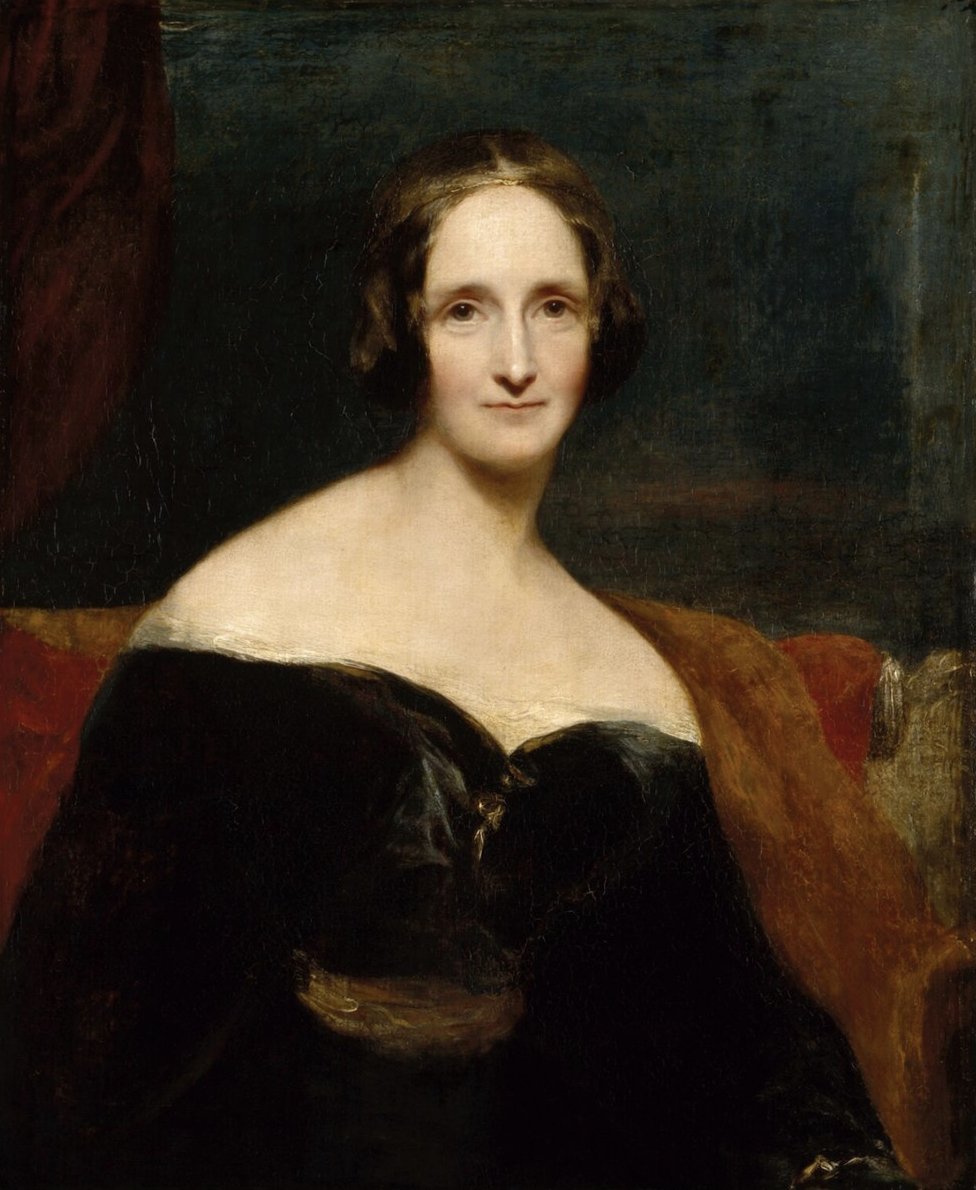
Portrait of Mary Shelley by Richard Rothwell, 1840 Richard Rothwell, 1840, public domain -
In case you missed it, this thread is part of a pair starting with Mary Shelley's mother, Mary Wollstonecraft, so definitely read that first because I'm going to be talking about people without re-introducing them.
-
Mary S's story starts exactly at the end of Mary W's life, because her mother died 11 days after giving birth to her in 1797. This left the uptight, emotionally repressed Godwin as a single parent to Mary and her half-sister Fanny (Imlay's daughter). This went extremely poorly.
-
Godwin was not an openly affectionate father. He also played obvious favorites with his two daughters, openly preferring Mary in all things, as a proxy for him thinking of himself as better than Imlay. This, understandably, fucked up Fanny forever.
-
Fanny also suffered from depression, as had Mary W before her, and so would Mary S. In fact nearly everyone in their lives was having clear mental health issues with absolutely no means to deal with them or even recognition that mental health was a thing, with dire consequences.
-
Two years after Mary W's death, Godwin remarried to yet another Mary, Mary Jane Clairmont, who brought with her two children of her own, Charles and Jane (I told you everyone in this story has the same name). Mary Jane was pretending to be a widow but in fact was a single mother.
-
It's important to understand that in the 1790s and 1800s in England having a child out of wedlock was considered a huge deal. Your reputation was ruined, people would not talk to you, you would be unable to find work. Enormous effort was therefore put into concealing them.
-
The blended Clairmont-Godwin family was not a happy one. Mary resented Mary Jane and constantly rebelled against her authority. Mary Jane was self-centered and dramatic. Mary S would later use "Clairmont" as a synonym for people she thought had these attributes.
-
But Godwin was a famous philosopher, so Mary's childhood featured visits from a variety of famous names, including the poet Samuel Coleridge, who told the girls stories, and Aaron Burr, disgraced former Vice President of the USA, for whom Mary wrote and performed a song.
-
Godwin was also constantly short of cash. Mary Jane helped out by opening a children's book store which was moderately successful, but Godwin also cultivated relationships with rich friends, including Percy Shelley, an aspiring poet and heir to a fortune.
-
This is how Percy Shelley met Mary S. She was strikingly beautiful and he was captivated, his passion only mildly encumbered by being already married to Harriet Westbrook, whom had recently given birth to his baby. He had already decided to leave her, and was looking for a sign.
-
"Looking for a sign" is not a metaphor. Shelley was a capital-R Romantic, which was not just an adjective but a literary and intellectual movement, an identity. Romantics rejected science, idealized nature, believed in ghosts and portents and were in general impossibly tedious.
-
So Shelley began courting Mary, encouraged by Godwin, who believed Shelley's inheritance could be the way out of his financial troubles. They were assisted in arranging their liaisons by Mary's step-sister Jane, but Jane was also strongly attracted to Shelley.
-
Percy and Mary S were both eye-rollingly earnest romantics. They regularly visited the grave of Mary's mother, whom they both idolized, and would read Mary W's poetry to each other in the graveyard while sitting at her grave. They were so goth. So, so goth.
-
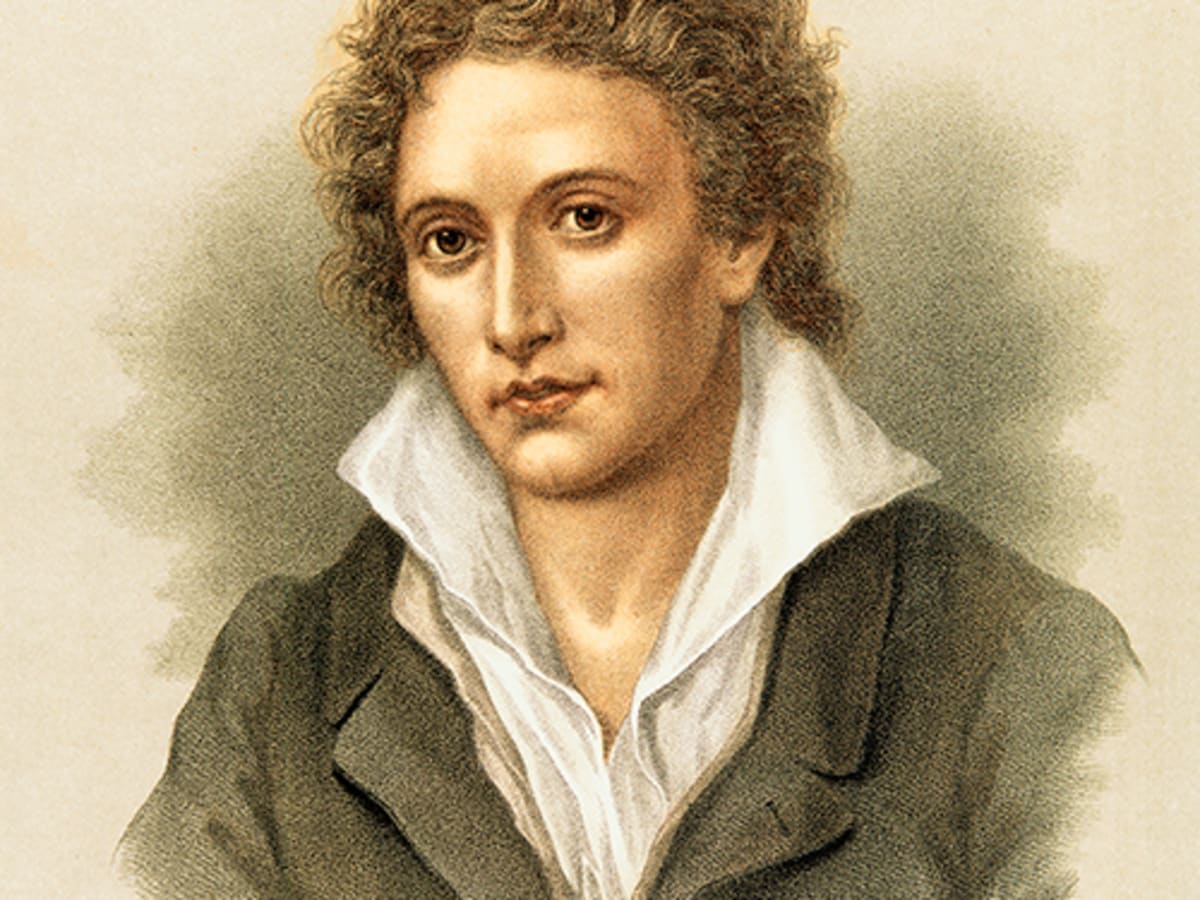
Portrait of Percy Bysshe Shelley, poet and Mary's great love, who read her mother's poetry at her grave Portrait of Percy Bysshe Shelley, public domain -
There is a persistent and delightful story that they consummated their relationship literally on top of Mary W's grave, but given the practicalities this is extremely unlikely. They probably did share their first professions of love there, and possibly their first kiss.
-
Shelley was at this point 21 and Mary 16. Despite having encouraged Percy's visits, upon hearing that they intended to elope Godwin was horrified. In extremely on-brand melodramatic fashion Percy arrived with laudanum and a pistol and threatened suicide if they were separated.
-
Percy and Mary decided they would flee to France to be together, and in a sign of things to come decided they would take Jane with them. The three of them left in the night, pursued by an irate Mary Jane, who caught up with them in Calais but could not persuade them to come back.
-
The result was a gigantic social scandal. A 21 year old poet, heir to a fortune, had abandoned his wife and child to elope with not one but two daughters of an already famous and scandal-wracked philosopher. Wild rumors circulated that Godwin had sold his daughters to Percy.
-
They arrived in France to discover that it was nothing like their romantic notions. France had been wrecked by revolution and war, Napoleon had left the countryside a wasteland. Instead of bucolic villages of friendly peasants they found angry people scrounging for food.
-
(We will be covering Napoleon in the next thread, incidentally)
-
They pressed on to Switzerland and got rooms in a hotel, where Percy and Mary had sex for what was probably the first time. True to their melodramatic ways, they prepared for the occasion by reading poetry to each other beforehand. They were really a lot, all the time.
-
They eventually ran out of money and decided to head back to England. Their route back avoided France by traveling by river. It was while on this trip that they passed the castle Frankenstein, and first heard the legend of an alchemist there who brought corpses to life.
-
In the late 1700s there was also an explosion of interest in science, and in particular some experiments that showed electrical current could cause dead animals to twitch. Mary's story combined the two, but is also replete with metaphors about feminism that were later ignored.
-
Look, I don't know about you, but it was news to me that 1) castle Frankenstein is a real place, and 2) that there was already a legend several hundred years old about the place that bears far more than a casual resemblance to the plot of Mary Shelley's most famous book.
-
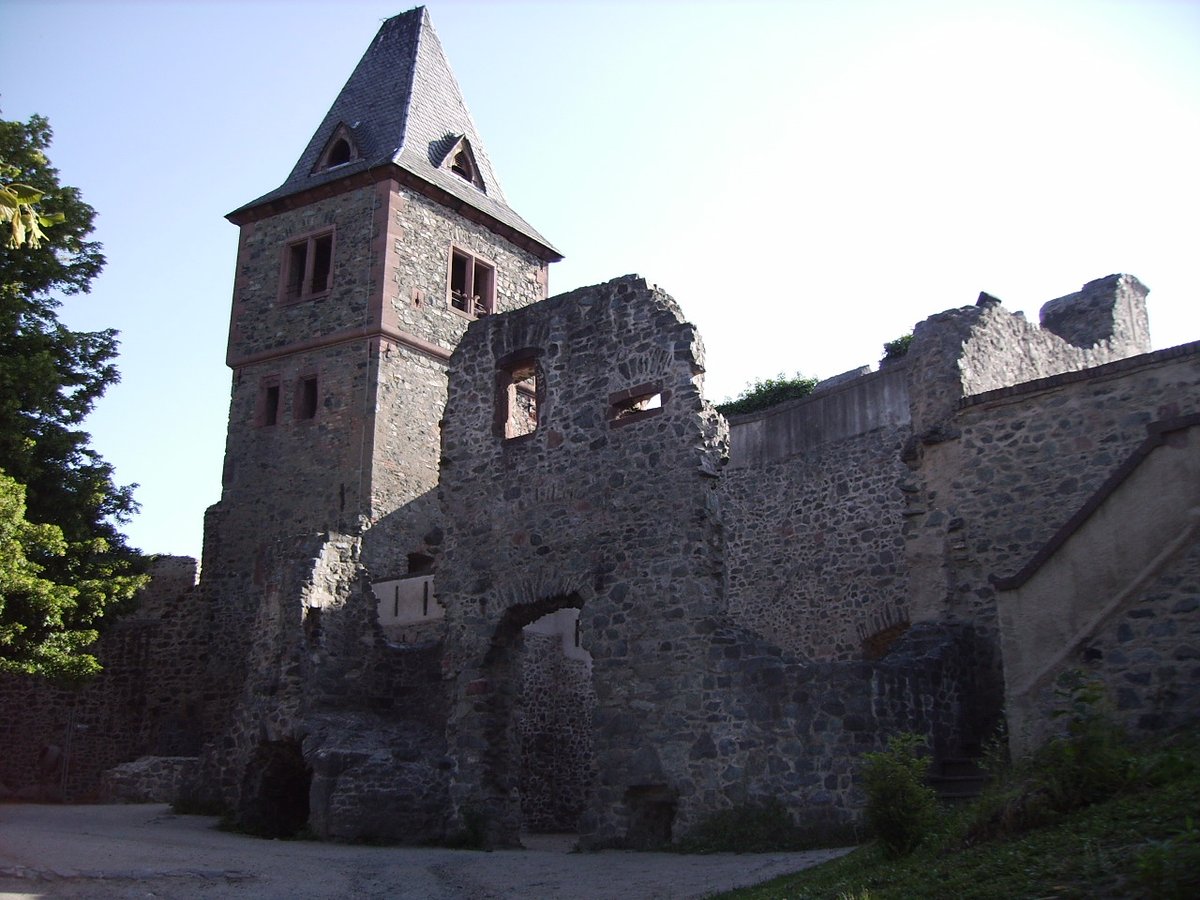
Burg Frankenstein, the real ruined castle in Germany that Mary Shelley visited and which lent its name and legend to her most famous novel Burg Frankenstein castle ruins by Twine333 via Wikimedia Commons (CC BY-SA 4.0) -
Discovering that Frankenstein is a re-telling of an existing story is the exact opposite of my experience of reading about Vlad the Impaler and discovering that Bram Stoker was *not* re-telling a legend and in fact was inventing the story from whole cloth:
-
Back in London, Mary discovered that she was pregnant. This further compounded the scandal and they were ostracized by everyone. Shelley had also over-spent his allowance from his father and was broke, both of which created tension in their relationship.
-
Meanwhile, Jane Clairmont had decided that she and not Mary was the true successor to Mary W's legacy. She changed her name from Jane to Claire and also declared that she had a new birthday, the same as Mary W's. Look, who among us hasn't changed our name as a teenager?
-
With tension between Mary and Percy caused by financial matters and her movements being limited in the advanced stages of pregnancy, Percy and Jane-now-Claire began spending more time together, eventually resulting in a ménage à trois, because these people are just nonstop drama.
-
It's unclear how Mary felt about this. She and Percy both had very strong convictions about freedom, like Mary W had, explicitly including sexual freedom and rejecting monogamy. On the other hand, she and Claire fought constantly over Percy so it can't have been totally amicable.
-
Mary's baby was born prematurely and died, leaving them both bereft. Meanwhile Claire disappeared for some time to the countryside; records of what happened have been destroyed by their descendants, but it was probably to have and then give away a baby of her own by Shelley.
-
I don't know if you've picked this up yet but all of these people must have just been absolutely exasperating to spend any amount of time with. They were constantly having dramatic scenes and never had their shit together. Just reading about them is exhausting.
-
Records for the next year are scant, but within a year of losing her first child Mary was pregnant again, giving birth to her second child, William (named after Godwin). Sure, just add another William to the mix of 3 Marys, 2 Janes, 2 Fannys and 3 Godwins, why the fuck not.
-
It is at this point that the level of scandal and debauchery is turned up to 11 by the entry into their lives of Lord Byron. Fantastically rich, openly bisexual, polyamorous and radical, he traveled in a replica of Napoleon's coach with a menagerie of animals and servants in tow.
-
The Shelleys were introduced to Byron by Jane-now-Claire, who had apparently decided (temporarily) to give up on Percy and determined to find a famous poet of her own. She successfully started a sexual affair with Byron. This was not tricky; he would sleep with almost anyone.
-
Byron was not much interested in Claire intellectually but he was fascinated by Percy, whose work he admired, and also by Mary. As the offspring of Wollstonecraft and Godwin, both famous radical philosophers, she seemed to Byron predestined to be an amazing philosopher herself.
-
Byron, Percy and Mary became friends and mutual admirers of each others' work, often assisting each other with ideas and talking through concepts together. Claire persuaded the three of them to spend a summer in Geneva, as a way of getting to spend more time with Byron.
-
Summering in Geneva was a sort of hobby for rich British people at the time, so the place was full of the same English society who were shunning the Shelleys in London. The addition of the even more scandalous Byron to their party further upped the stakes.
-
We know an enormous amount of detail about what happened in Geneva that summer thanks to John Polidori, who was traveling with Byron as his personal doctor but was also in the pay of a publisher to act as a spy and report on Byron's activities for the newspapers.
-
The quartet of Byron, Percy, Mary and Claire were known as the "league of incest" thanks to the (probably accurate) belief that Percy was sleeping with both sisters, and also Byron's reputation for sleeping with basically anybody, including his cousins and maybe his sister.
-
They mostly shrugged off or ignored this reputation and many even wilder rumors. Percy in fact leaned into the reputation, signing hotel registers as a "democrat, philanthropist, and atheist", a combination of descriptors so shocking that even Byron tried to cross them out.
-
One can perhaps understand why "atheist" was shocking; "democrat" was still very daring in the 1790s, especially in England, but why "philanthropist"? Because "phil" means "loving" and "anthropos" means "mankind": it was understood in the 1800s as a euphemism for "homosexual".
-
I don't know about *you* but having discovered that it used to mean "gay" I am going to be describing myself as a "dedicated philanthropist" for the rest of my life.
-
The summer in Geneva was not very summery thanks to a major volcanic eruption that had disrupted the climate worldwide. Thus the Shelleys, Mary and Polidori found themselves stuck in a cold and rainy lake house with nothing better to do but tell each other ghost stories.
-
Thus was a famous literary event born. Challenging each other to write a new kind of story, Polidori wrote The Vampyre, the first modern vampire novel, while Mary struck even greater gold by combining previous legends and her own experience into Frankenstein.
-
It was also during this summer that, in a bit of foreshadowing, we should note that Percy Shelley was first introduced by Byron to sailing boats. Percy loved sailing and did it at every opportunity but never -- cue dramatic music -- learned how to swim.
-
Returning to England, the Shelleys found the people they had left behind were doing poorly. Mary S's elder sister Fanny succumbed to her lifelong depression and killed herself by drinking laudanum. Since suicide was a crime, they covered this up.
-
Just a day later, Percy's wife Harriet also killed herself, in her case by throwing herself into the Serpentine. These twin tragedies threw the trio of Mary, Percy and Claire into endless guilt and mutual recriminations of how their mistreatment had caused the events.
-
Claire, meanwhile, found that she was pregnant by Lord Byron (I told you, these people are non stop drama). Since this was yet another scandalous baby born out of wedlock, they arranged an absurd cover story where they pretended the baby belonged to some friends of theirs.
-
Mary S was also pregnant again, by Percy. This baby survived birth and Mary named it Claire, presumably because there were only 4 acceptable first names in the 1800s, or maybe they just wanted to fuck with future historians by giving everybody confusingly similar names.
-
Percy was once again in financial trouble (honestly, these people are exhausting) so to escape debtor's prison and to improve Percy's health, the trio once again moved as a family unit to Italy, with little William, baby Claire and Byron's daughter with Claire, Allegra, in tow.
-
In Italy things were initially idyllic but things soon went south. Byron showed up and demanded that Claire hand over baby Allegra. Since in the 1800s she had no legal right to her own child, and knowing she would inherit Byron's wealth, a grief-stricken Claire agreed.
-
Byron then sent Allegra to a convent to be educated, where she caught typhus and died. In a desperate attempt to rescue the child while she was still merely ill, Percy and Mary went to the convent to retrieve her, but it was too late.
-
The tragedy was compounded since on the journey Mary's own daughter Claire became ill and also died, followed 9 months later by young William. Mary and Percy were now childless, and the combination of tragedies drove them apart and both deep into depression.
-
At the time of young William's death Mary was however already pregnant with her fourth child. He was born in 1819 and named Percy because sure, yes, let's have two Percy Shelleys in this story, this situation wasn't confusing enough with the Marys and Janes and Claires, fuck.
-
Thoroughly estranged by grief, Mary and Percy both began to have affairs with other people. The details and how serious these affairs were are once again lost to history by their meddlesome descendants, who tried their best to destroy any records of these events.
-
Around this time another baby, Elena Adelaide Shelley, was born in Naples, registered as the child of Percy and Mary. This is almost certainly not true but whose baby it really was is unclear; it may have been Byron's child with Allegra's nursemaid. She died a year later.
-
Meanwhile, Percy had got involved in an ill-fated attempt to out-do Lord Byron's enormous yacht by building a very fast and dangerously unstable sailing boat. Caught in a storm on a return trip from visiting Byron, the boat sank and Percy and his two sailing companions drowned.
-
Percy's funeral was a completely on-brand affair, replete with melodrama: he was burned in a pyre and his dessicated heart retrieved from the flames and kept in a box. Mary was catatonic with grief, so it was arranged by Edward Trelawny, a fame-hungry friend of Percy's.
-
Trelawney was quite the character. He made up stories about a swashbuckling life of adventure, borrowing liberally from stories by Byron. Percy accepted these stories as fact but Byron, recognizing his own work, was clear that Trelawney was a charlatan.
-
Now Mary had lost 3 children and her husband in very short order, and was a widow with a young child to take care of. She returned to England, resolving to support herself and her son with her writing, which she managed successfully.
-
But Mary was not quite done with romantic dramatics. In 1827 she was instrumental in a scheme by which her friends Isabel Robinson and her lover, Walter Douglas, a trans man, fled to France, where they lived as husband and wife thereafter.
-
Adding to the queerness of her later life, she also had what sounds very much like an unrequited lesbian affair with a woman named, I can't believe this, Jane Williams, adding a fourth Jane and a third William to the mix, I give up, they are doing this on purpose.
-
She also looked after Percy Shelley's legacy (Percy Shelley her husband, not her son, although him too, I fucking hate these names), collecting, organizing, and editing his unpublished works, cementing his reputation forever as a famous poet.
-
Young Percy, though loyally devoted to his mother, shared none of the qualities of his famous parents. He grew up as the 1800s version of a jock, poor at school work, tremendously interested in sports and hunting. This frustrated Mary enormously but she loved him regardless.
-
Mary lived another 30 years, dying at age 53 from what was probably a brain tumor. After her death they opened her writing desk and found suitably dramatic keepsakes: locks of her dead children's hair, a journal she had shared with Percy, and the charred remains of his heart.
-
In terms of legacy Mary Shelley will forever be known as the author of Frankenstein, but she also made important philosophical contributions to the romantic movement, to feminism and the study of gender, as well as her huge accomplishment in securing Percy's legacy.
-
But I personally will now forever remember Mary Shelley and Mary Wollstonecraft as the source of the most exasperatingly tangled web of interpersonal drama, endless laudanum and drowning, made all the more tangled by everybody having the same fucking names.
- Previously: Mary Wollstonecraft
- Next: Napoleon
- Full list
Text and images copyright © 2020-2023 Laurie Voss
except where indicated
except where indicated